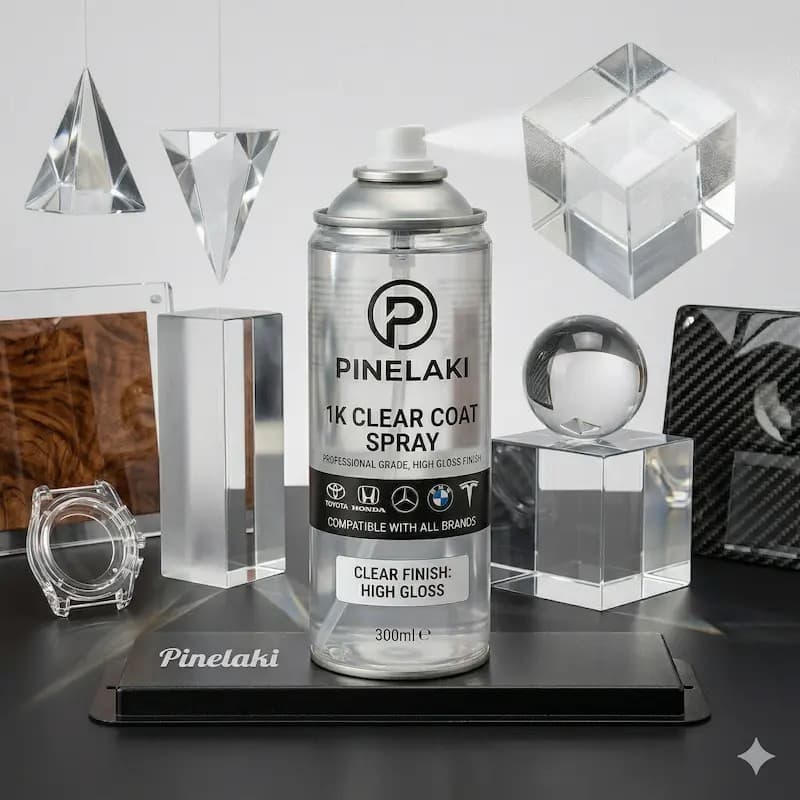
1K Clear Coat Varnish Spray: Easy Protection & Gloss for Factory Code Paints
SKU: SPY1K
Γκαλερί
Περιγραφή
What Is 1K Clear Coat Spray?
A ready-to-use 500 ml spray that adds a high-gloss protective finish over your Factory Code Spray Paint. No mixing, no hardener, no time limit — spray it now or months from now. The 1K formula is ideal for spot repairs, panel touch-ups, and smaller paint projects. It is the same single-component acrylic lacquer technology Pinelaki has trusted for decades across Cyprus DIY customers.
Features & Benefits
- Enhances colour vibrancy of spray paint repairs
- Protective layer against scratches, fading, and UV rays
- High-gloss finish
- Ready-to-use formula — no hardener required
- Long shelf life — use it over multiple sessions
- Easy spray application
How to Apply
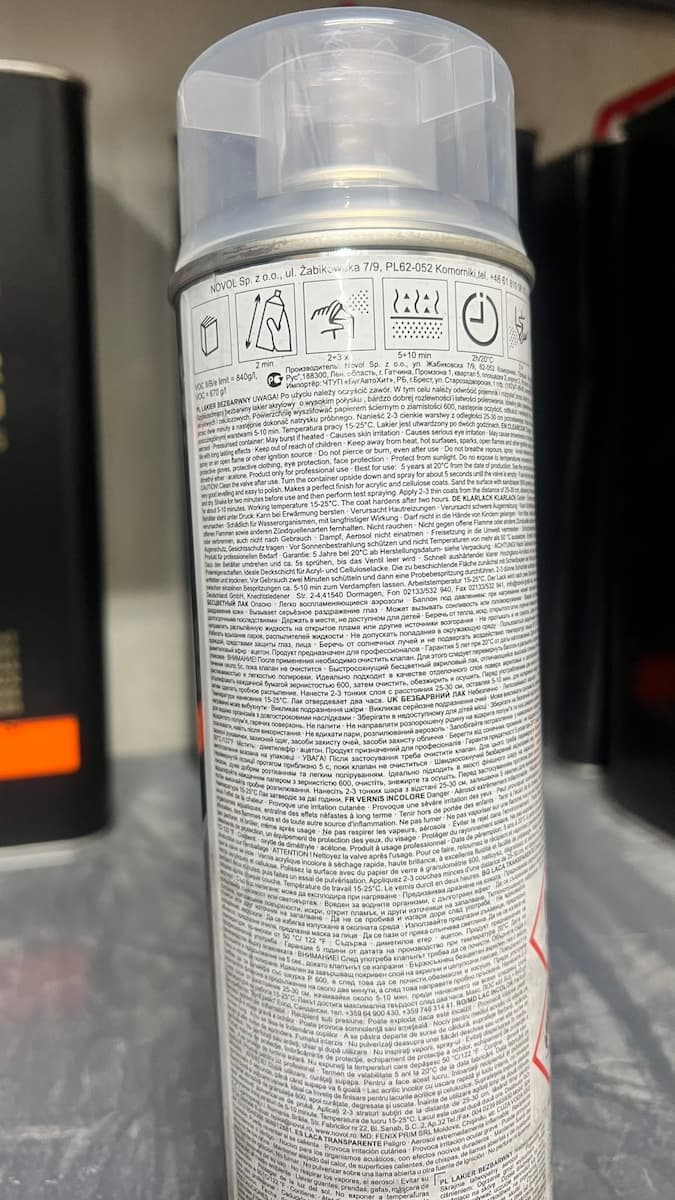
- Prepare: Ensure your spray paint has dried completely (15–20 minutes at 20°C).
- Shake: Shake the can vigorously for 60 seconds.
- Spray: Apply in even, light coats at 20–30 cm distance. 2–3 coats recommended.
- Dry: Allow 10–15 minutes between coats. Full cure in 24 hours.
How Do I Prep the Surface Before Spraying?
Clear coat exposes every flaw underneath, so prep matters:
- Wait for the base colour to flash off. Your spray paint should be dry to light touch (10–20 minutes) but not fully cured. Clear coat sprayed over fully cured colour may bead or pull.
- Tack-wipe the surface. A clean microfibre with a drop of isopropyl alcohol removes any dust or overspray that settled during drying. Never use water — moisture under clear coat causes cloudiness.
- Mask precisely. Use quality masking tape and paper. Cheap tape leaves ragged edges and adhesive residue that the clear coat highlights.
- Test on scrap. Spray a small test on cardboard at the same distance and angle you will use on the car. This reveals a clogged nozzle or pressure issue before you commit.
What Temperature and Humidity Do I Need?
Clear coat is fussier about conditions than base colour. For the clearest, glossiest result:
- Temperature: 18–25°C. Below 15°C the spray atomises poorly and leaves orange peel. Above 30°C the solvent flashes off mid-air and the finish feels rough.
- Humidity: Below 60%. High humidity traps moisture and creates a milky haze known as "blushing."
- Airflow: Gentle, not windy. You want solvent vapour to dissipate but not blow dust onto a wet surface.
- Time of day: Early morning or late afternoon in Cyprus summer — avoid the midday heat and direct sun.
1K vs 2K — Which Clear Coat Do I Need?
| 1K (This Product) | 2K | |
|---|---|---|
| Mixing | None required | Activate hardener before use |
| Shelf life | Months — reuse anytime | 10 hours after activation |
| Durability | Good for small repairs | Maximum — professional grade |
| Solvent resistance | Avoid thinners/solvents | Resistant to solvents |
| Best for | Spot repairs, touch-ups | Full panels, bumpers |
Need maximum durability? Choose our 2K Clear Coat Spray with included hardener.
Can I Polish 1K Clear Coat to a Showroom Finish?
Yes. Wait at least 24 hours (ideally 48–72) before polishing. Wet-sand lightly with 2000 grit, then 3000 grit, keeping the paper flooded with water and soap. Follow with a fine rubbing compound on a soft foam pad, then a finishing polish. Low speed (around 1500 RPM on a dual-action polisher) with light pressure avoids burn-through. Finish with a paint-safe wax or sealant. Remember 1K is thinner than 2K — you have less material to work with, so go gently.
How Do I Troubleshoot Common Problems?
- Orange peel (textured surface): Can was too cold, too far away, or the coat was too dry. Warm the can to room temperature, move to 20–25 cm, and apply slightly wetter coats.
- Runs or sags: Too much material in one pass. Stop and let it dry fully, then wet-sand the run flat with 1500 grit and re-spray.
- Fisheyes (round craters): Silicone or oil contamination on the surface. No amount of re-spraying fixes this — you must sand back past the fisheye layer, re-clean, and re-coat.
- Milky haze (blushing): Humidity too high. Wait for a drier day or warm the area with gentle airflow, then wet-sand and re-coat.
Safety Notes
- Spray outdoors or in a well-ventilated garage — never in a sealed room.
- Wear a respirator rated for organic vapours, not just a dust mask.
- Keep away from open flames; the propellant is flammable until fully evaporated.
- Store upright at 5–30°C. Do not leave in a hot car — pressurised cans can rupture above 50°C.
Shipping & Delivery
- Cyprus: FREE delivery to any Akis Express — Nicosia, Limassol, Larnaca, Paphos, Famagusta
- Greece & Worldwide: Affordable international shipping
Frequently Asked Questions
Can I use 1K clear coat over touch-up paint?
For small touch-ups, use our brush-on Clear Coat Varnish instead. This spray is designed for larger spray-painted areas.
How many coats should I apply?
2–3 light, even coats for the best gloss and protection. Allow 10–15 minutes between coats.
Will solvents damage the 1K finish?
Yes — strong solvents like thinners can damage 1K clear coat. For solvent-resistant protection, use the 2K Clear Coat.
How long does a 500 ml can cover?
Roughly one full panel (door, bonnet quarter) with 2–3 coats, or several smaller spot repairs. For a bumper or larger area, plan for two cans. Coverage drops if you hold the can too close or spray too heavily.
Can I use 1K clear coat on plastic bumpers?
Yes, provided the base colour adhered correctly. Plastic bumpers benefit from a plastic adhesion promoter before the colour coat; once the colour is down, 1K clear works the same as on metal panels. For heavy-wear bumper edges, the more durable 2K spray is a better long-term choice.
How soon can I wash the car after applying clear coat?
Avoid water contact for 24 hours and automatic car washes for 7 days. Hand-wash only for the first two weeks, and skip wax or polishing sealants for at least 30 days — the clear coat continues to cure and needs to breathe off residual solvent.